
Anna: Journey of Healing to Overcome Emotional Trauma
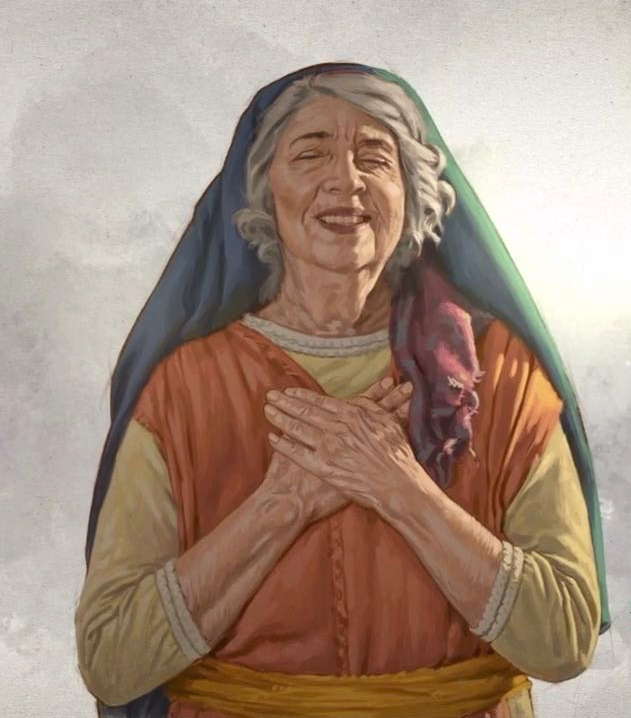
Anna: A Journey of Healing from Emotional Trauma
When we think about healing from emotional trauma, we often imagine modern therapy rooms or support groups. But Scripture gives us profound examples of people who endured unthinkable emotional pain and still emerged out of pain into purpose. One of those is Anna the Prophetess, a title not given lightly. It meant she was trusted, wise, and deeply connected to the Lord. Let’s take a look at how 3 verses (Luke 2:36–38) mentioned briefly but powerfully about Anna’s life historically, politically, culturally, personally, and spiritually.
Historically
Anna lived during a time of great silence and oppression. The 400 years between the Old and New Testaments were marked by God's silence, foreign rule, and political turmoil. Luke wrote she was about 84 years old who lived through several generations. Yet in those 400 years silence, God was still working—and Anna was the first mention of a prophetess in the New Testament.
When Mary and Joseph brought baby Jesus to the Temple (Luke 2:22–35), first Simeon greeted them, rejoicing that he had seen the Lord's salvation. Then came Anna, a prophetess who proclaimed the redemption of Jerusalem. Just three verses capture her story—but her legacy is rich with meaning for anyone walking through the valley of emotional trauma.
Politically
Anna lived through the rule of Rome, a time of harsh occupation, division, and open violence:
She likely remembered the Feast of the Tabernacles rebellion, where King Janneus’s disrespect toward the Pharisees resulted in the massacre of 6,000 people in the Temple.
She witnessed the horror of Pompey’s invasion of Jerusalem (64 BC), where priests were slaughtered and the Holy of Holies was profaned.
These events weren’t just political facts; they were traumatic realities, imprinted on her memory and spirit. Anna lived through terror, violence, and fear—yet she remained faithful.
Culturally – Personal loss and widowhood
Luke tells us Anna had been married for only seven years when her husband died (Luke 2:36–37). That likely left her a young widow, and we hear no mention of children. In Jewish culture, widowhood without children brought shame, financial hardship, and deep personal grief. According to tradition, she may have also been barren, a status that compounded her loss (see 1 Samuel 1:2, 10).
The levirate law (Deut. 25:5–10) could have provided remarriage through a brother-in-law, but it seems Anna remained alone—unmarried, childless, and vulnerable. She must have been truly a widow in need and completely alone in the world; thus, the reason she was given living quarters at the temple.
Despite her trauma events, Anna remained faithful while at the temple devoting herself to prayer, fasting, and worship. In the culture of the time, it was not uncommon to cast widows aside; however, Anna found a connection and hope.
Personally
Luke mentions Anna’s tribe through her father: Asher. This detail matters. Typically, the husband is mentioned not the father. In Deuteronomy 33:25, Moses blessed the tribe of Asher saying, “Your strength will equal your days.” Somewhere in her timeline Anna received recognition and honor from her own people, as they regarded her as a ‘voice of God’. Anna had a connection to her own people that gave her hope. She connected out through the temple. Ultimately, we know she connected up to God as she had the gift of prophecy, a mouthpiece, to bring God’s word to His people. It’s no coincidence Anna lived into her 80s. Her strength came from God, and that strength sustained her through decades of hardship.
Spiritually
Luke tells us Anna was a thankful woman. Gratitude is often the key to unlocking healing. Anna thanked God—not after she received something—but in the ongoing pain and waiting. She praised God even in the unknown. She had strong ties to her Jewish faith.
When baby Jesus was brought to the temple, Anna was ready. She had spent decades fasting, praying, and preparing for the moment she would behold the Messiah. And when she did, she spoke boldly, proclaiming His arrival to all who were waiting for redemption.
What We Learn from Anna
Emotional traumatic experiences shatter your sense of safety and security. She could have become bitter but she chose to be better. She did not allow her young pain to become old resentment. Anna’s life is an example of someone who has chosen not to live in regret, anger or even bitterness, but to devote her life to God.
Emotional traumatic experiences also leaves a person overwhelmed and helpless, even if no physical harm was done. Your emotional experience of stressful events can leave you struggling leaving a person in crisis numb, disconnected, and the inability to trust. We should always treat those who have been traumatized with compassion and care. We know God honors widows. Psalms 68:5 “A father to fatherless, a defender of widows, is God in His holy dwelling.”
Isaiah wrote in 1:17, “Learn to do right, seek justice, defend the oppressed, take up the cause of the fatherless, plead the case of the widow.” In Anna’s latter years, she was characterized with faithfulness, loyalty, and devotion to God. Somewhere in her timeline, there must have been a kind person to lead her to safety. Her recovery time took years and she was fully healed as the scripture stated God became her provider.
Although Anna was a widow, her story is for every trauma survivor, for everyone who has walked through disaster, domestic violence, emotional abuse, or personal devastation. Her life reminds us:
Trauma takes time to heal.
Being alone doesn’t mean being forgotten.
Grief doesn’t have to lead to bitterness.
God sees, honors, and uses the brokenhearted.
Anna is proof that God does not waste pain. She was connected. She did not isolate but insulated her life with others. She took time to be refreshed in His presence, stayed devoted to His will, and rejoiced in the outcome. Her life culminated in seeing the Messiah, the very hope of the world.
“She gave thanks to God and spoke about the child to all who were looking forward to the redemption of Jerusalem.” (Luke 2:38)
Let Anna’s story remind you: God is still near to the brokenhearted. He still goes after the one. He still calls and uses those who’ve been through the fire. And He is still faithful.
God Brings Hope in Trauma Today
As a crisis interventionist, may I remind you: bring hope, help, and healing to those navigating emotional trauma. Like Anna, they may not see results overnight. But over time, and with care, they can move from survival to significance.
If you're going through emotional trauma, ask for help. Seek therapy, counseling, spiritual guidance, or a trusted and kind person. Needing support is not a sign of weakness, but a sign of wisdom. Healing often begins with connection and kindness. Be open to receive help. Make a plan with someone and make yourself accountable.
Need help? You're not alone.
If you're dealing with emotional trauma, here are a few steps you can take:
Talk to a trusted and kind friend, counselor, or spiritual leader.
Join a support group.
Seek professional help when needed.
Stay connected to community.
Remember: healing takes time, but it is possible.
Anna is our example—that trauma doesn’t have the final word. Devotion does.
Pray with Me.
Dear Lord,
Thank You that You understand our sorrows and walk with us through every trial. You chose to share in our humanity, experiencing the fullness of joy and pain, so that we could trust You in our moments of deepest need.
Thank You for the example of Anna, who after experiencing deep loss, did not withdraw in despair but chose to draw near to You. She stayed connected to her community, worshiped faithfully, and remained devoted to Your presence. Her life reminds us that You do not waste our pain—you redeem it, reshape it, and give it purpose.
Help us, like Anna, to turn our wounds into worship, our grief into faithfulness, and our trauma into testimony. May we find healing not by isolating, but by seeking You and serving others with hearts that remain open to Your will.
Transform our pain into purpose, and let our lives reflect the hope that You bring through every season.
In Jesus’ Name, Amen.