

Sign-Up For One of our Next Workshops/Presentations
〰️
Sign-Up For One of our Next Workshops/Presentations 〰️

Dear Reader,
Every person needs to be understood. Every person longs to be validated. Just as crises in life come in waves, stages, and layers, Kindness can meet those crises at every level. When we extend kindness in God’s way, He uses willing hearts to bring Hope, Help, and Healing to others.
The Bible offers us clear examples—both to follow and not to follow. And through these accounts, we gain powerful insights into human struggles, divine intervention, and the transformative nature of Kindness.
“For everything that was written in the past was written to teach us, so that through the endurance taught in the Scriptures and the encouragement they provide we might have hope.” Romans 15:4
In a world overflowing with content, it’s rare to find writing that truly speaks to the soul—insightful, inspirational, and rooted in truth. That’s what you’ll find on my blog: deep reflections on the lives of men and women in Scripture, lessons on how to make good choices and avoid destructive ones, and biblical perspectives that challenge us to grow and love better.
If you’ve attended the Voice of Kindness training, you’ve already heard powerful, real-life accounts from Scripture—of people who overcame despair, despondency, and emotional crises. The blog goes even deeper.
Topics Below include:
The Biblical foundation for Kindness
The divine characteristics of God as our model
The “ABCs of De-escalation” for helping those in emotional or mental crisis
The Code of Ethics for Crisis Intervention
Strategies to reduce suicidal ideation and promote mental wellness
Lessons from Scripture on bringing stability and strength to the hurting
Each post is thoughtfully written and deeply researched, with one goal: to inspire action and reflection rooted in faith and compassion.
Whether you're here to be encouraged, to grow spiritually, or to better support others, this blog is for you.
The Pen of Ready writer’s mission to spread Hope, Kindness, and Healing.
If you or someone you know is in immediate danger, call 911. For suicide or crisis support in the U.S., call or text 988 for the Suicide & Crisis Lifeline.
© 2026 Voice of Kindness. All rights reserved. No portion of this website, materials, curriculum, images, or content may be reproduced, distributed, or used without written permission.

The Rooster Crow
Peter and Judas
There is a moment in every crisis when something shifts—a sudden spark of awareness, a piercing realization that echoes deep in the soul. I call it the “Rooster Crow” moment—that instance when a person in despair awakens to the possibility of hope. It’s a call to remember, to feel, and to reconnect.
For those of us passionate about crisis intervention, understanding this moment is key. Kindness, as simple as it seems, is often the catalyst that brings people back from the edge. It creates a climate where resiliency, recovery, and referral are not only possible but probable. Through connectedness, we foster life-saving opportunities for hope, help, and healing.

Anna: Journey of Healing to Overcome Emotional Trauma
A biblical example of a long-term healing from emotional trauma would be Anna. Anna was a prophetess in the New Testament. If you recall, there were 400 years of silence from Malachi to Matthew. It wasn’t until Mary and Joseph showed up at the Temple (Luke 2:22-35) to make a purification offering (Leviticus 12:6-8) for their first born before God (Ex 13:2, 12-15). First, Simeon (righteous and devout) cradles the Lord Jesus and praises God. Anna enters and prophesies the redemption of Jerusalem (Luke 2:36-38)

Brokenness to Blessedness
The Apostle John shared a great example in scripture regarding brokenness through the account of the Samaritan Woman (John 4:4-30) – the ‘Woman at the Well.’ In the Biblical days, Jews hated Samaritans, and women were culturally demeaned. To place a Jewish man with the combination of the two – a Samaritan and a woman, would have been despicable to many Jews. It was the noon hour (hottest part of the day), when the woman at the well came to draw out water. Her brokenness must have led her to avoid meeting the other women knowing most had drawn from the well in the morning or evening. She must have been a woman of shame.
Urgently Needed: Kindness
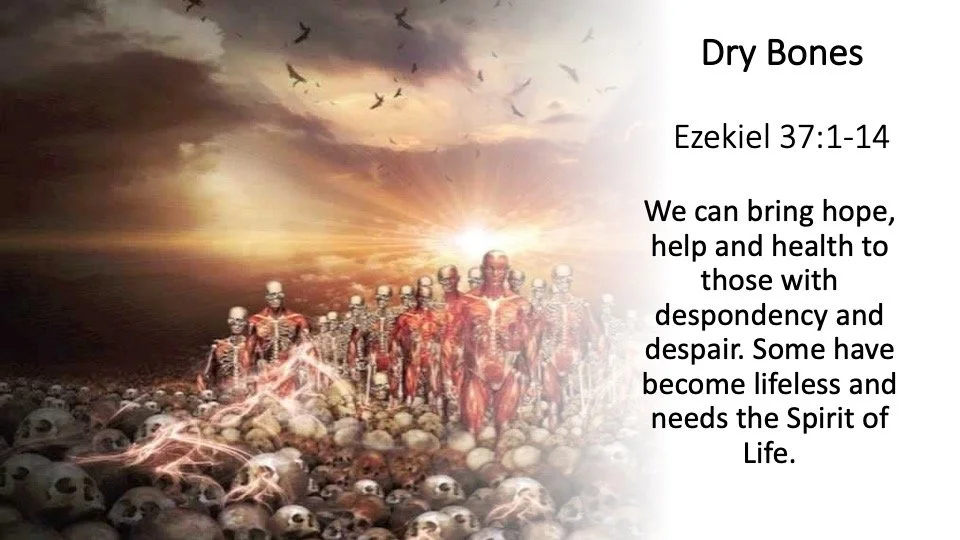
As many of you know, our beloved United States and our churches are facing a mental health crisis. Suicide is killing both believers and unbelievers. It has been troubling with verifiable evidence over the past two decades. For the first time in a generation, there is a significant decline in life expectancy. This decline is not the result of war, crime, famine or disease, but despair. People are dying younger due primarily to suicide, drugs, alcohol and abuse. Those who are despondent and in despair are like the Dry Bones in the Book of Ezekiel. We are surrounded with so many people who have become hopeless without life.

Crisis Intervention is Simply BE KIND
Crisis intervention often sounds intimidating. It conjures images of chaos, fear, and high-stress situations. But at its core, crisis intervention is simply about being kind.

Crisis to Curative
Bringing Hope, Help, and Healing:The Power of Curative Cause
Crisis often descends like a dark cloud—heavy, disorienting, and overwhelming. For many, a personal crisis involves deep emotional conflict or pain that leaves them feeling stuck, hopeless, or unsure of how to move forward. Yet in the darkest moments, there is a light—a path toward healing, hope, and renewal. This is where the Curative Cause begins.

A Call to Action: BE KIND
Every person, at some point, will be confronted with the urgent need to intervene in someone’s life—whether that person is facing harm, despair, or the overwhelming possibility of death. God calls us to step in with kindness, to intervene when hope feels lost, and to be the hands and feet of His love and healing in moments of crisis.
Too often, we refer others to God in times of struggle, and that’s right to do—but God also calls us to actively participate in the restoration process. He invites us to partner with Him. We are called to be more than bystanders. We are called to be crisis interventionists—carriers of kindness, hope, and healing

Persevere: A Cry for Hope in the Midst of Crisis
A message both for caregivers and for those in crisis. It’s my prayer it captures the compassion, perseverance, and spiritual hope that can carry someone through their darkest moments.
Don’t Give Up: Whether You’re the One in Crisis or the One Caring
When I reflect on the struggles faced by those who care for loved ones in crisis—especially when depression, hopelessness, and despair weigh heavily—I think of Heartfelt Guardians. These are the caregivers who, day in and day out, offer strength, support, and presence to someone who feels lost in the dark.
Crisis intervention is often immediate—an action taken to deescalate someone from crisis to safety. But crisis caregiving is the long journey, often taken by family members or friends, walking alongside someone in pain toward healing and restoration. It requires enduring love and unshakable patience to help prevent or minimize the silent suffering that can lead to suicidal thoughts.

The Safety Peace Plan
The Safety Peace Plan provides something tangible—something clear, compassionate, and calming to help guide the next steps and to remind them they are not alone.
“God is not a God of confusion but of peace.”
— 1 Corinthians 14:33 (ESV)